New Delhi: India’s labour market is undergoing a significant transformation, led by right skilling, a rising entrepreneurial spirit and sustained government initiatives, resulting in a steady decline in unemployment, according to the Economic Survey 2025–26 tabled in Parliament by Union Finance and Corporate Affairs Minister Nirmala Sitharaman.
The Survey notes that employment dynamics are being reshaped by digitalisation, the green energy transition and emerging forms of work such as gig and platform-based employment. In the post-pandemic phase, the focus has shifted from merely generating jobs to improving the quality of work, reflecting a more inclusive and sustainable labour market approach.
India has recorded strong employment gains in recent years, supported by structural reforms, tax rationalisation, deregulation, GST 2.0 and labour reforms implemented by states. These measures have contributed to higher labour force participation and employment growth across industry and services.
Positive Employment Trends
The Economic Survey highlights a sharp rise in the Female Labour Force Participation Rate (FLFPR), which increased from 23.3 per cent in 2017–18 to 41.7 per cent in 2023–24. During the same period, the unemployment rate declined from 5.6 per cent to 3.2 per cent, signalling improved inclusion and economic empowerment.
Data from the Periodic Labour Force Survey (PLFS) indicate a stable labour market with seasonal variations. During April–September 2025 (H1 FY26), the unemployment rate declined under the current weekly status, while labour force participation stabilised. In Q2 FY26, around 56.2 crore people aged 15 years and above were employed, reflecting the creation of nearly 8.7 lakh new jobs compared to the previous quarter.
Rural employment continues to be dominated by agriculture and self-employment, with women showing relatively higher participation, while urban employment is largely concentrated in the services sector, particularly in regular wage and salaried jobs.
Manufacturing and Rural Entrepreneurship
The Annual Survey of Industries (ASI) shows that organised manufacturing employment grew by 6 per cent year-on-year in FY24, adding over 10 lakh jobs compared to FY23. Over the past decade, the sector has added more than 57 lakh jobs.
Entrepreneurial activities are also driving a self-employment revolution, particularly in rural India. The unincorporated non-agricultural sector comprises about 7.9 crore establishments, employing 12.9 crore individuals, with women accounting for nearly 28.7 per cent of the workforce. Increased digitisation in this sector is evident from the growing use of the internet among enterprises.

Expanding Social Protection and Job Matching
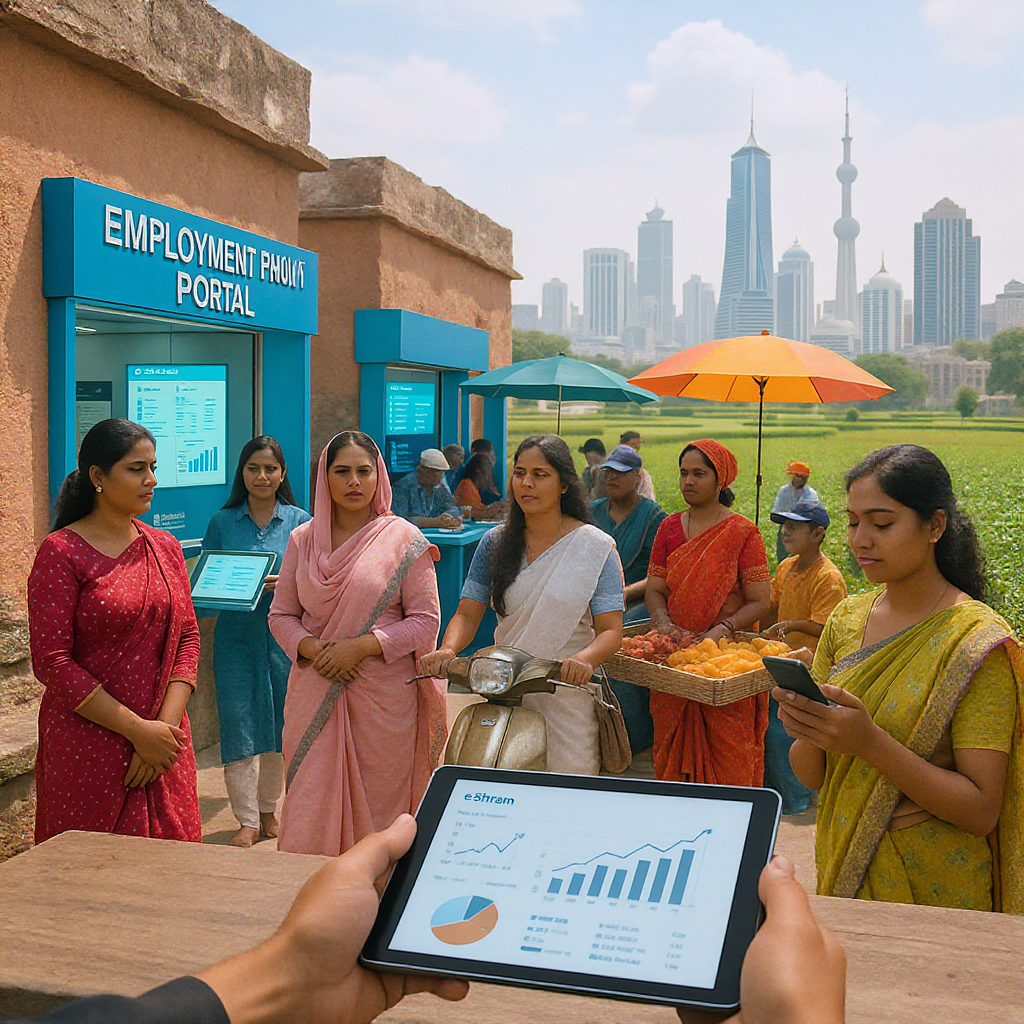
The Survey underscores the role of the e-Shram portal in extending social protection to unorganised workers. As of January 2026, over 31 crore workers are registered on the portal, with women constituting 54 per cent of the total. The platform supports welfare delivery, skilling and improved employment opportunities for informal workers.
The National Career Service (NCS) portal has also emerged as a key employment facilitation platform. In the first six months of the current fiscal, more than 2.3 crore vacancies were mobilised through the portal. Since its launch, the NCS has connected over 5.9 crore job seekers and 53 lakh employers across sectors.
Labour Codes and the Gig Economy
The Survey highlights the potential of the four Labour Codes, notified in November 2025, to balance worker welfare with ease of doing business. These Codes consolidate 29 central labour laws and formally recognise gig and platform workers, extending social security and benefit portability.
The gig workforce has expanded rapidly, witnessing a 55 per cent increase from FY21 to FY25, growing from 77 lakh to 1.2 crore workers. The Survey projects that non-agricultural gig work could account for 6.7 per cent of the workforce by 2029–30.
Need for Flexible Work Hours
With rising female workforce participation, the Survey acknowledges the need for flexible work arrangements. Findings from the Time Use Survey reveal that women continue to shoulder a higher burden of unpaid and caregiving work, making flexible work models critical for sustaining their participation in the labour market.
Overall, the Economic Survey 2025–26 concludes that continued focus on skills, entrepreneurship, labour reforms and social protection will be key to sustaining job creation and reducing unemployment in the years ahead.